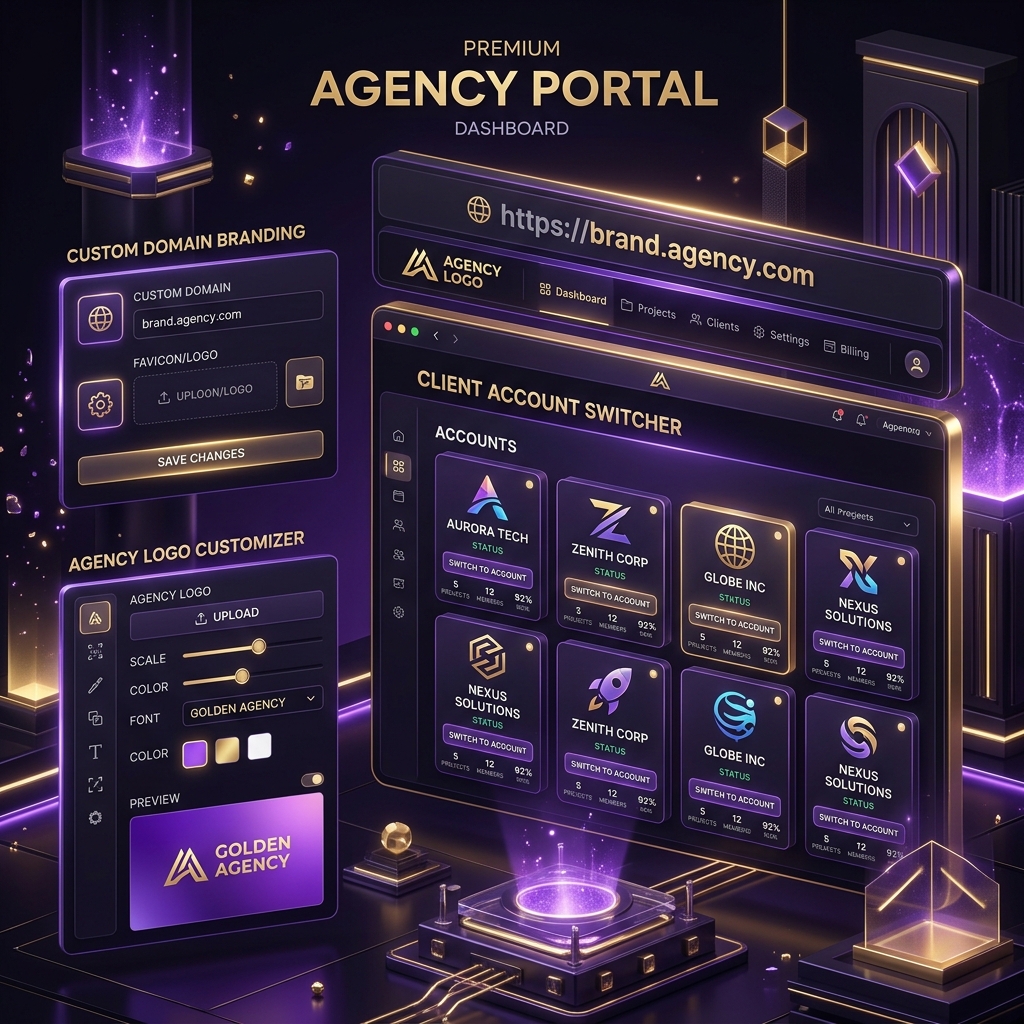
A reseller plan is not winning just because the pricing table says white label. Agencies need to know whether the product can actually support multiple client companies, separate data, branded access, safe limits, and profitable rollout.
The strongest white-label CRM model lets the agency sell under its own brand while each client keeps its own CRM data, provider accounts, users, templates, and billing context.
Separate agency mode from enterprise white label
Agency mode is about managing many client companies efficiently. White label is about letting those client companies log in under the agency brand. Both matter, but they solve different problems.
A practical structure is Starter for one company seat, Pro Growth for growing teams, Agency for agencies managing up to 10 client companies, and Enterprise Reseller for larger teams that need 50 users, 50 client companies, custom branding, and controlled rollout support.
Client isolation is more important than the logo
The logo and domain create trust, but isolation creates safety. Each client should have its own contacts, pipeline, campaigns, WhatsApp templates, email settings, AI calling configuration, billing context, and activity logs.
If one client can accidentally see another client data, the product is not ready for serious agency resale. A good reseller model treats every client company as its own workspace under the agency umbrella.
Use provider-owned billing to keep reseller margins healthy
The reseller should not silently absorb WhatsApp API messages, email delivery, AI calling minutes, or telephony charges. Those costs should flow through CPaaS, Meta, Brevo, Sender.net, Bland, Vapi, Plivo, Exotel, Tata, or the customer provider account.
That keeps the platform subscription clean: CRM, digital cards, campaign builder, automation, agency dashboard, reporting, support, and white-label control.
Build proof with test mode before selling live automation
Agencies selling automation should always demo a safe test workflow first. One or two test numbers can prove WhatsApp Business API templates, email, AI calling, timing rules, and reports before the agency opens the workflow to real client leads.
This makes the sales pitch stronger because the buyer sees a working system, not only a promise. It also reduces onboarding anxiety for non-technical users.
The reseller sales angle
The best pitch is not "we sell CRM." It is "we give your business a branded lead follow-up engine with digital cards, WhatsApp API, email, AI calling, and automations, while usage stays in your own provider accounts."
That positioning is easier for agencies to sell because it combines software, implementation, and recurring service without pretending that message and call usage are free.
Frequently Asked Questions
What should a true white-label CRM include?
A true white-label CRM should support agency branding, custom domain, client isolation, reseller user management, controlled feature access, clear plan limits, and provider-owned usage billing for WhatsApp, email, AI calling, and telephony.
What is the difference between agency mode and white label?
Agency mode lets an agency manage multiple client companies from one dashboard. White label goes further by letting client users experience the platform under the agency brand and domain.
How can a reseller protect margin?
Keep heavy usage costs outside the software subscription. If WhatsApp API, email, AI calling, and telephony are paid through the customer or provider wallet, the reseller can price workflow, setup, support, and strategy without absorbing unpredictable usage.
Share this article